The 70% rule in house flipping: what the number pays for, and when it breaks
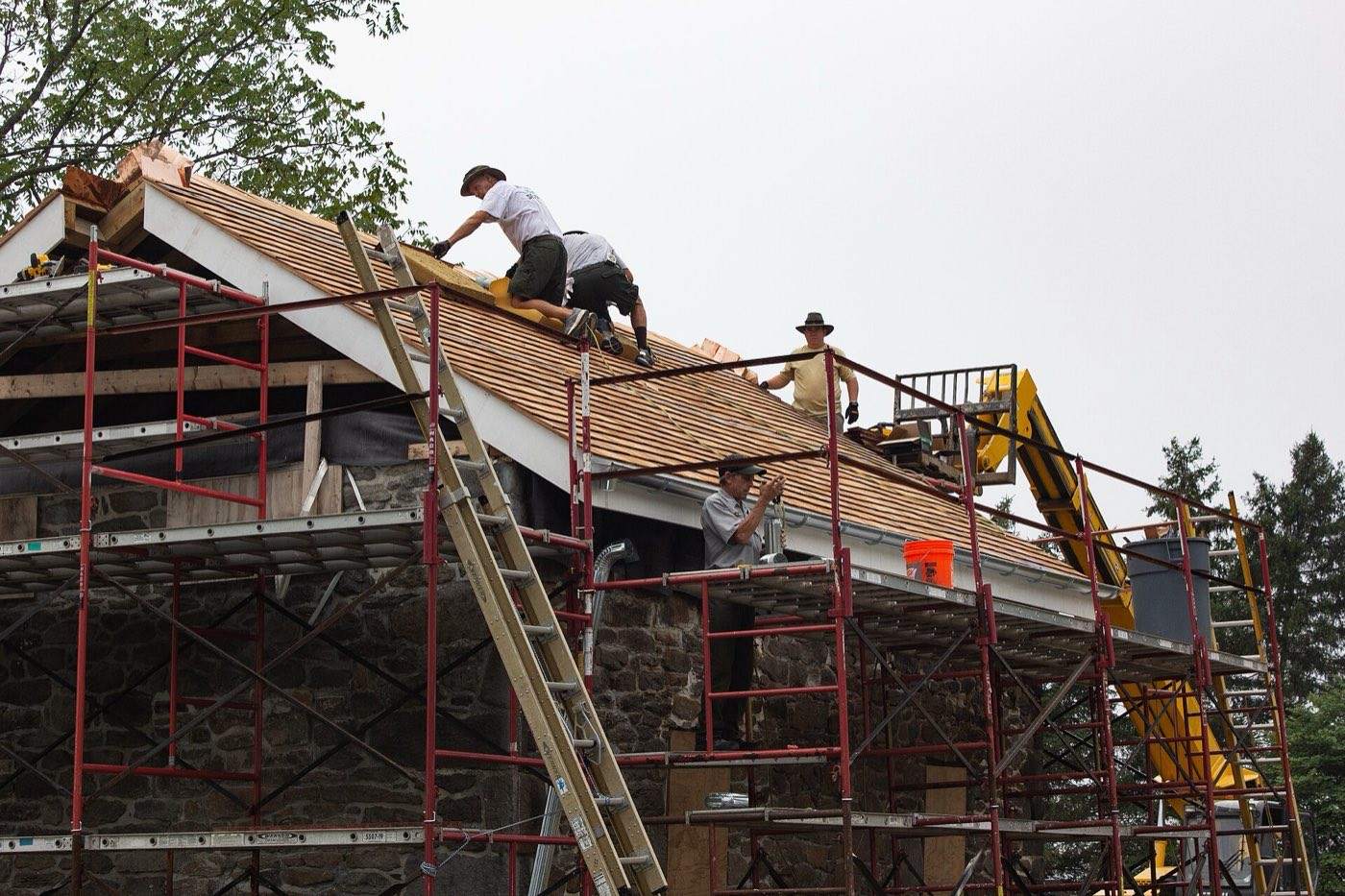
Every flipping forum repeats the same line: never pay more than 70% of after-repair value minus repairs. It is a good first filter and a bad last word. The multiplier is not a market law — it is a rough budget for selling costs, financing, carry and profit, calibrated for a mid-priced house on a six-month timeline. Change any of those inputs and the number should move with them.
The formula, and what it produces
Maximum allowable offer = (ARV × 0.70) − rehab budget. Take an after-repair value of $420,000 and a $60,000 scope of work: 70% of $420,000 is $294,000, minus $60,000 leaves a maximum offer of $234,000. Nothing else appears in the equation — not your loan, not your closing costs, not the eight months of property taxes. That is deliberate. The 30% is supposed to cover all of it and leave a profit.
Which means the rule is only as good as its two inputs. A rehab budget written off a walkthrough rather than a scope of work, or an ARV pulled from active listings rather than closed comparable sales, produces a confident number built on nothing. Our guide to how lenders evaluate ARV covers the comp discipline an underwriter applies to the same property — and it is usually stricter than the one the buyer applied.
Where the other 30% goes
On the same $420,000 project, financed at typical hard money pricing and sold after eight months. Figures are illustrative, not quotes:
| Cost line | Illustrative amount | Share of ARV |
|---|---|---|
| Selling costs — commissions, title, transfer tax, buyer concessions | $29,400 | 7.0% |
| Origination points and buy-side closing costs | $8,800 | 2.1% |
| Interest carry over eight months | $16,900 | 4.0% |
| Taxes, insurance, utilities, permits | $6,000 | 1.4% |
| Rehab contingency at 10% of the $60,000 budget | $6,000 | 1.4% |
| Remaining pre-tax profit | ≈ $58,900 | 14.0% |
The interest line assumes a loan around 90% of the $294,000 total cost, priced near the middle of the ranges in rates, points and LTV, with rehab money released in stages rather than at closing — that staging, explained in how rehab draws work, is why the carry is computed on an average balance well below the full loan amount. The profit line is pre-tax: a flip held under a year is ordinary income, often with self-employment tax on top, which is the subject of taxes on flipping houses.
Now stress it. Two extra months on the calendar add roughly $5,700 of interest and carry. An ARV that comes in 5% light — $399,000 instead of $420,000 — costs about $19,500 net of the commission you no longer pay on the missing value. Pre-tax profit falls from about $58,900 to about $33,700, near 8% of ARV. Nothing went catastrophically wrong in that scenario. That is the point: the 30% is a shock absorber, and one ordinary disappointment consumes half of it.
The multiplier moves with the price band
No agency publishes these numbers; they are the working conventions investors quote, and they exist because fixed costs do not scale with price.
| ARV band | Multiplier commonly used | Why it drifts |
|---|---|---|
| Under $150,000 | 60%–65% | Title, insurance, permits, inspections and minimum lender fees are close to flat. A $15,000 fixed stack is 10% of a $150,000 sale and under 3% of a $500,000 one. |
| $150,000–$400,000 | Around 70% | The band the rule was written for: percentage costs and fixed costs balance out. |
| $400,000–$700,000 | 72%–75% | Percentage costs dominate, so the fixed stack matters less — but days on market and price risk both rise, which argues the other way. |
| Above $700,000 | Deal by deal | Thin buyer pool, long marketing periods, and a single price reduction that can exceed the whole profit budget. A blanket multiplier stops being informative. |
The five assumptions that break it
- A real rehab. On a $15,000 cosmetic refresh, 70% leaves a margin nobody has to give you: competitive buyers bid light-rehab houses to 78% or 80% of ARV and still make money, because there is almost no construction risk to price.
- A six-month clock. Structural work, a foundation, an addition or anything needing a zoning variance can put twelve to eighteen months between purchase and listing. Carry that long is not a rounding error, and lender extensions are priced accordingly — see what happens when a hard money loan matures.
- Hard money pricing. If the money is genuinely cheap — a partner at 8%, or your own cash — the carry line shrinks and a higher multiplier is defensible. If you are paying points on both a purchase loan and a gap loan, it is the reverse.
- No fee stacked inside the price. When the deal comes from a wholesaler, the assignment fee is already inside your purchase price. Buying a $234,000 house at $234,000 through an assignment means the seller got less and you got no discount for it.
- A sale you control. In markets where most first-time buyers use FHA financing, HUD’s property flipping restriction in Handbook 4000.1 limits FHA-insured resales within 90 days of your acquisition date, with additional documentation between 91 and 180 days when the price jumped sharply. It rarely kills a deal; it does push closings past a maturity date.
What lenders do with the same number
The 70% figure is not a coincidence: it is roughly where fix-and-flip lenders cap their own exposure. A typical structure advances 85%–90% of total cost and no more than 65%–75% of ARV, whichever binds first. Pay above the rule and the ARV ceiling starts doing the deciding.
Take a purchase at $260,000 with the same $60,000 rehab — $320,000 of cost against a $420,000 ARV. Ninety percent of cost is $288,000, but 70% of ARV is $294,000, so the cost test binds and you bring $32,000 plus points and closing. Pay $290,000 instead and cost rises to $350,000: 90% of cost is $315,000, but the ARV ceiling caps the loan at $294,000 and your cash requirement jumps to $56,000. Overpaying does not just shrink the profit, it moves the down payment — which is how investors end up reaching for cross-collateral or the structures described in what 100% financing really means. Leverage limits and foreclosure speed both vary by state; the hard money state pages set out what each one does.
A better filter: run the deal backwards
- Pin the ARV from closed sales within the last three to six months, same school district, similar square footage and condition — not from active listings.
- Build the rehab from a written scope with contractor pricing, then add 10%–15% for what the walls hide.
- Price the money: points, interest for your realistic month count plus two, draw inspection fees, extension terms.
- Add carry — taxes, insurance on a vacant property, utilities, lawn, security, HOA dues.
- Take selling costs from what actually happens locally, including the concessions buyers are currently getting.
- Set the profit you require in dollars, not as a percentage, and solve backwards for the purchase price.
That number is your offer. The 70% rule is the sanity check you run afterwards: if the two are far apart, one of your inputs is wrong. The full project-level version sits in structuring a fix-and-flip loan, and the hub at hard money loans collects the rest.
Claude Loan is an information site — not a lender, broker, financial adviser or law firm. Nothing here is an offer of credit, a valuation, or a promise that any deal will be profitable or any loan approved. Figures are illustrative ranges, not quotes; verify lender licensing through NMLS Consumer Access and get local contractor and agent pricing before you commit capital.
Frequently asked questions
Does the 70% rule already include closing and holding costs?
Yes — implicitly, and that is the misunderstanding that costs people money. The 30% gap is meant to absorb selling costs, loan points, interest, taxes, insurance, utilities, a contingency and your profit all at once. It is not 30% profit. On a mid-priced project with normal hard money pricing, the pre-tax profit left over is closer to 10%–15% of ARV, before income tax.
Is the rule different for a BRRRR or a rental?
Different, because the exit is different. A flip pays selling costs of 6%–8% that a refinance never incurs, but a refinance is capped by the appraiser and by the lender’s loan-to-value on the new loan, and it leaves you owning the debt. Investors holding the property usually work backwards from the refinance proceeds and the rent instead — the sequencing is in refinancing a rehab into a conventional or DSCR loan.
What if I am paying cash?
Your carry line falls to taxes, insurance and utilities, so on paper a higher multiplier works. Two cautions: cash has an opportunity cost you should still price, and cash deals tend to attract longer, larger projects because nothing forces a deadline. The discipline of a maturity date is worth something.
Do hard money lenders require you to follow the 70% rule?
They do not underwrite your offer, but their ARV cap lands in the same place, so an offer well above the rule usually means a bigger cash contribution rather than a decline. Some lenders will fund it if your cash and experience carry the file; the deal still has to clear its own costs at resale, and no lender is checking that for you.
Sources
Related: How hard money lenders evaluate ARV — and how to estimate it yourself, Fix-and-flip financing: structuring the loan around the project, Hard money rates, points and LTV: typical ranges and what moves them, Taxes on flipping houses: dealer status, ordinary income and self-employment tax. Hub: Hard money.