Hard money for new construction: ground-up loans, draws and the exit
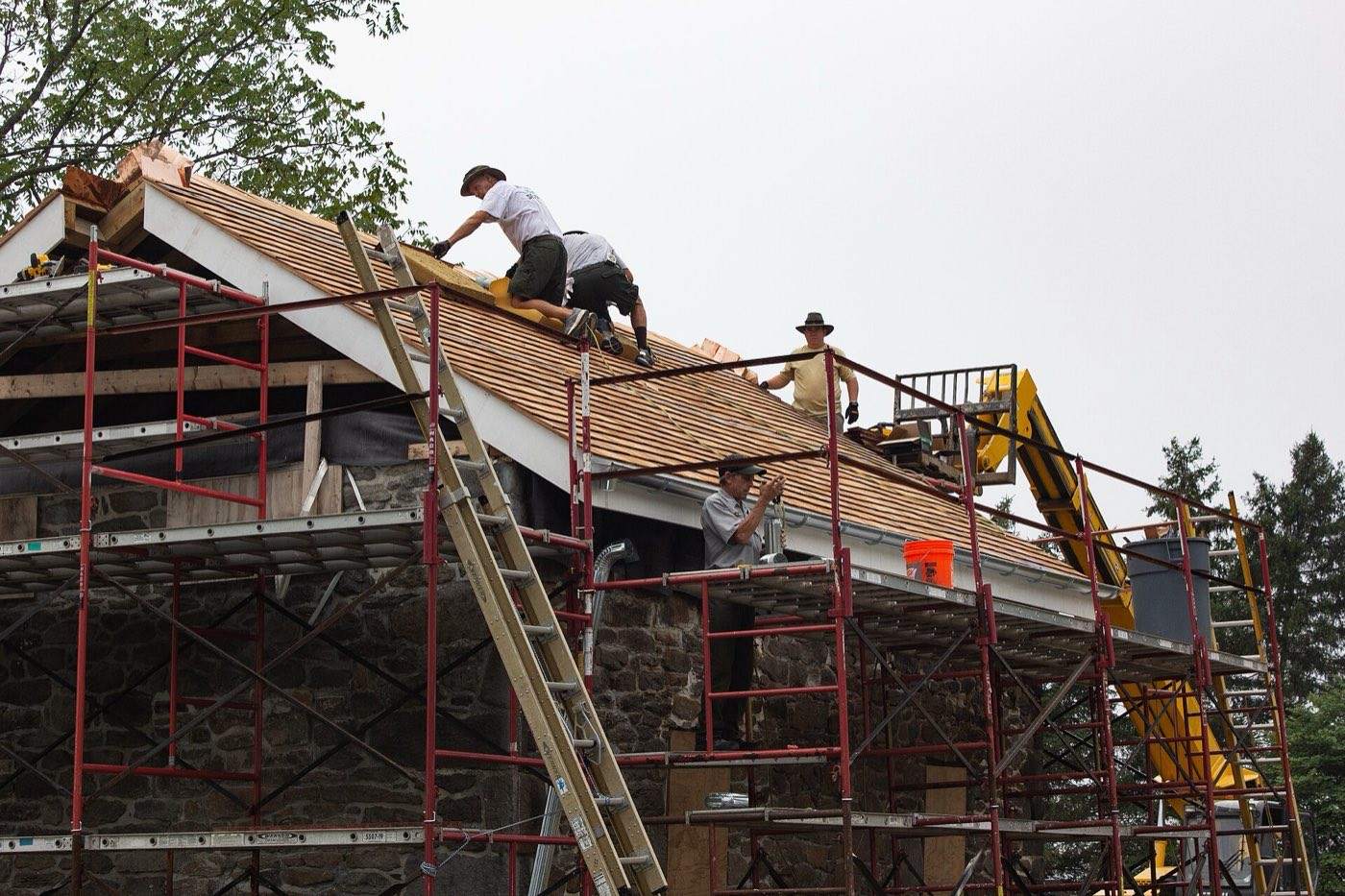
Ground-up construction is the hardest thing a hard money lender funds. There is no house to appraise — only a lot, a set of plans, a budget and a builder. The money leaves in stages as the building rises, and the whole loan is priced for one risk: that the last stage never gets finished.
What a ground-up loan actually covers
A new-construction hard money loan is usually two facilities under one note: an acquisition piece secured by the land, and a construction piece released in draws against completed work. Lenders quote three numbers, and all three have to work at once — loan-to-cost (LTC), loan-to-as-completed-value (often written as ARV or LTARV), and the cash you keep in the deal.
- Land: financed at a lower ratio than a finished house, commonly 50%–65% of the purchase price when the lot is entitled, zoned and permit-ready. Raw or unentitled land is frequently excluded — see hard money for land and commercial property.
- Vertical construction: often funded at 90%–100% of the hard-cost budget, disbursed draw by draw rather than at closing.
- Soft costs: architectural and engineering fees, permits, impact fees, surveys. Sometimes financed in part, often expected from your own capital because they are spent before a shovel moves.
- Interest reserve: several months of interest held inside the loan so the project carries itself. It is real money and it reduces what is left for construction.
Typical terms (indicative market ranges, not offers)
| Term | Typical range | What moves it |
|---|---|---|
| Interest rate | 10%–14%, interest-only | Experience, leverage, market, lender type |
| Origination points | 1–3 points | Loan size, experience, competition |
| Loan-to-cost (land + build) | 70%–85% of total cost | Completed projects on your résumé |
| Loan-to-as-completed-value | 60%–70% | Comps depth, product type, submarket |
| Term | 12–24 months, extensions at 0.5–1 point per 3–6 months | Scope and permitting timeline |
| Draws | 5–8, inspection fee roughly $150–$350 each | Lender policy, distance from inspector |
| Experience floor | Commonly 1–3 completed builds or heavy rehabs | Some lenders substitute a licensed GC partner |
These are ranges we see quoted in the investor lending market, not quotes and not forecasts. Pricing moves with the rate environment; verify everything against a written term sheet.
How draws work — and why they strain cash flow
You pay for work first; the lender reimburses after. A framing draw is released once framing is complete and an inspector confirms it, typically three to ten business days after the request. That lag is the single most common cash squeeze on a build: subcontractors want payment on completion, and the draw arrives afterward. Ask four questions before you sign — how many draws are included, what the fee and turnaround are, whether the lender funds by percentage of completion or by line item, and whether they hold retainage (5%–10% of each draw held until the certificate of occupancy is issued).
Ask one more: does interest accrue on the full loan amount from day one, or only on funds actually drawn? On a $260,000 construction budget over fourteen months, the difference easily runs to $20,000.
What the lender underwrites
- Your track record: addresses, before-and-after photos, closing statements. Ground-up is where experience tiers bite hardest.
- The budget: a line-item schedule of values with a 10%–15% contingency. A round number invites a lower advance.
- Plans and permits: approved plans, an issued or clearly imminent building permit, utility availability, and any HOA or design-review approval.
- The builder: license, general liability and builder’s risk insurance, workers’ compensation, and a signed contract. Owner-builders are financed by fewer lenders and at lower leverage.
- The as-completed value: an appraisal built from closed comparable sales of similar new construction, not from your pro forma.
- Liquidity: cash reserves beyond the down payment, commonly several months of payments plus the contingency.
- The exit: how the loan is repaid, in writing, with a plan B.
An illustrative deal
Lot at $90,000; construction budget of $260,000; appraised as-completed value of $475,000. The lender advances 60% of the lot ($54,000) and 100% of hard costs in draws ($260,000) — a $314,000 loan, roughly 90% of the $350,000 cost and 66% of as-completed value. At an illustrative 12% with 2 points over a fourteen-month build, interest on the drawn balance runs near $26,000 (the balance starts around $54,000 and only reaches $314,000 at the end), plus $6,280 of points. Add soft costs, property taxes, insurance and closing — call it $25,000 — and the project is about $407,000 all in. Selling at $475,000 with 6% of selling costs nets roughly $446,000: a pre-tax profit near $39,000 on about $70,000 of cash. A four-month permitting delay adds roughly $9,000 in interest plus extension points; a 10% budget overrun adds $26,000. The margin is the contingency.
The three exits
Selling to a retail buyer who finances with a conventional loan is the cleanest, and the reason lenders care so much about the appraisal comps. Refinancing into a DSCR or conventional rental loan works when the finished home cash-flows — note the seasoning and value rules, covered in our guide to refinancing a rehab into conventional or DSCR. A construction-to-permanent loan from a bank or credit union avoids a second closing but requires bank-grade qualification up front, which is exactly what pushed most investors to hard money in the first place.
Where ground-up deals go wrong
- Permits slip. Entitlement and utility connections are outside your control and routinely add months.
- The interest reserve runs dry before the certificate of occupancy, and payments start coming out of pocket at the worst moment.
- The GC walks or goes under mid-project; unpaid subs record mechanic’s liens that block the draw and the sale.
- Comps thin out. New construction in a market with few recent new-build sales can appraise below the pro forma, shrinking both leverage and exit.
- Default is fast. Maturity default on a business-purpose loan moves at the pace of your state’s foreclosure process — check yours on the state hard money pages, and read what happens in a hard money default.
Claude Loan is an information site, not a lender, broker or licensed contractor. Nothing here is an offer of credit or a promise that any project will be approved or profitable.
Frequently asked questions
Can a first-time investor get a ground-up construction loan?
It is possible but uncommon at attractive leverage. Options include partnering with an experienced builder or investor whose track record the lender will count, starting with a heavy rehab to build a résumé, or accepting lower LTC and more cash in the deal. Some lenders will consider a first-timer who brings a licensed, insured general contractor with a documented history.
How is a construction loan different from a fix-and-flip loan?
A rehab loan is secured by a house that already has value; a construction loan is secured mostly by dirt until the frame goes up. That means lower advance on the land, more draws, closer inspection, longer terms and stricter documentation. The comparison in our fix-and-flip financing guide applies to the vertical phase, not to the land.
Do I need a licensed general contractor?
Most lenders require one, with proof of license, general liability coverage, builder’s risk insurance and workers’ compensation. Owner-builder programs exist but are narrower and usually lend less. State licensing rules differ — verify with your state contractor board.
What happens if the build is not finished at maturity?
Extensions are usually available for a fee if the project is visibly progressing and payments are current, commonly half a point to a point for three to six months. If the project has stalled, the lender may declare a maturity default. Raise the timeline problem early; lenders extend for borrowers who call before the due date far more readily than for those who go quiet.
Sources
Related: Fix-and-flip financing: structuring the loan around the project, Hard money rates, points and LTV: typical ranges and what moves them, How hard money lenders evaluate ARV — and how to estimate it yourself, Hard money exit strategies: sell, refinance, or hold — and the plan B. Hub: Hard money.