Conventional loans in Vermont: conforming limit, real monthly costs, PMI timeline
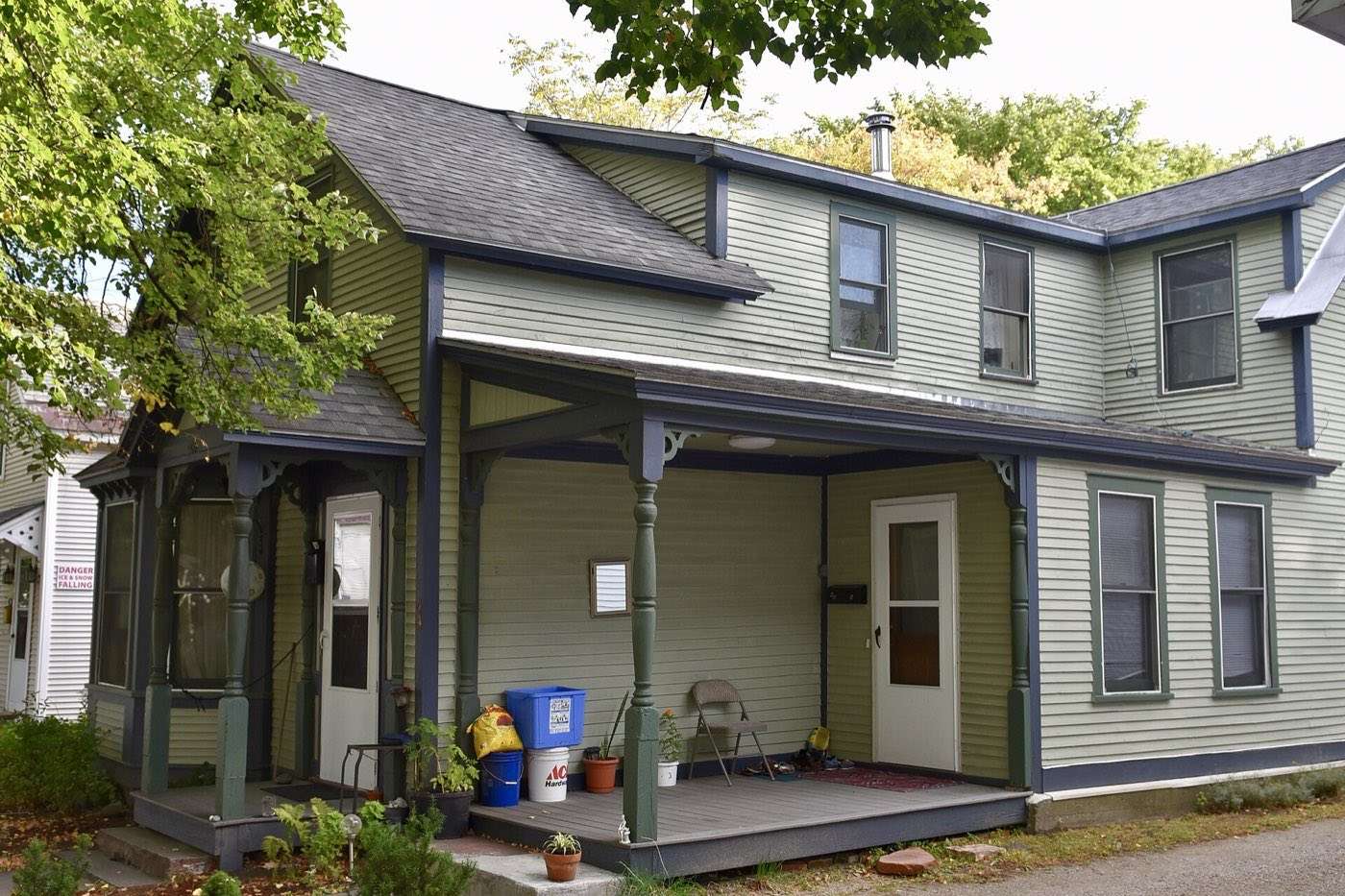
Vermont buyers using a conventional loan face the same three questions everywhere — how much down, what it costs each month, when mortgage insurance ends — with answers that depend on the state’s $400,000 median and 1.83% effective property tax. This page works them out, then covers the Vermont rules that touch the loan.
| Conforming limit (2026, one unit) | $832,750 baseline — all 14 counties, no FHFA high-cost area |
|---|---|
| Median home price (approx.) | $400,000 — statewide order of magnitude |
| 20% down on the median | $80,000 down, loan $320,000, about $2,023/month P&I at 6.5% |
| 5% down on the median | $20,000 down, loan $380,000, about $2,402/month P&I + about $238 PMI |
| PMI ends (5% down, scheduled payments) | request at 80% after about 10 years and 4 months, automatic at 78% after about 11 years and 3 months |
| Property tax (effective) | about 1.83% — roughly $7,320 a year on the median |
| Closing practice | Attorney closing state |
Conforming or jumbo in Vermont?
A conventional loan is conforming when it fits Fannie Mae and Freddie Mac’s limit and their guidelines; in Vermont that limit is $832,750 for a one-unit home in 2026. With 20% down, a purchase up to about $1,040,938 stays conforming; with 5% down, up to about $876,579. The state’s $400,000 median leaves ample room, so a typical purchase here is conforming unless the buyer is in a premium neighborhood. Every Vermont county is in the table below; see conforming loan limits and jumbo loans.
Vermont loan limits, county by county (2026)
FHFA’s 2026 county list gives every Vermont county the same one-unit limit, $832,750, and the same multi-unit limits ($1,066,250 / $1,288,800 / $1,601,750). Nothing in the state is designated high-cost, so a loan above $832,750 is jumbo anywhere in Vermont.
| County | 1 unit | 2 units | 3 units | 4 units |
|---|---|---|---|---|
| Addison County | $832,750 | $1,066,250 | $1,288,800 | $1,601,750 |
| Bennington County | $832,750 | $1,066,250 | $1,288,800 | $1,601,750 |
| Caledonia County | $832,750 | $1,066,250 | $1,288,800 | $1,601,750 |
| Chittenden County | $832,750 | $1,066,250 | $1,288,800 | $1,601,750 |
| Essex County | $832,750 | $1,066,250 | $1,288,800 | $1,601,750 |
| Franklin County | $832,750 | $1,066,250 | $1,288,800 | $1,601,750 |
| Grand Isle County | $832,750 | $1,066,250 | $1,288,800 | $1,601,750 |
| Lamoille County | $832,750 | $1,066,250 | $1,288,800 | $1,601,750 |
| Orange County | $832,750 | $1,066,250 | $1,288,800 | $1,601,750 |
| Orleans County | $832,750 | $1,066,250 | $1,288,800 | $1,601,750 |
| Rutland County | $832,750 | $1,066,250 | $1,288,800 | $1,601,750 |
| Washington County | $832,750 | $1,066,250 | $1,288,800 | $1,601,750 |
| Windham County | $832,750 | $1,066,250 | $1,288,800 | $1,601,750 |
| Windsor County | $832,750 | $1,066,250 | $1,288,800 | $1,601,750 |
Source: FHFA, Conforming Loan Limit Values for 2026 (county list, mortgages acquired in calendar year 2026). Limits are for Fannie Mae and Freddie Mac loans; FHA and VA use their own county figures.
What a conventional loan costs on the Vermont median
Each row is the same $400,000 Vermont home at 6.5% for 30 years — only the down payment changes. PMI is an illustrative market rate for that down payment; property tax is the state’s rough 1.83% effective rate divided by twelve.
| Down payment | Cash down | Loan | P&I | PMI (est.) | Property tax | Monthly total |
|---|---|---|---|---|---|---|
| 3% | $12,000 | $388,000 | $2,452 | $291 | $610 | $3,353 |
| 5% | $20,000 | $380,000 | $2,402 | $238 | $610 | $3,250 |
| 10% | $40,000 | $360,000 | $2,275 | $150 | $610 | $3,035 |
| 20% | $80,000 | $320,000 | $2,023 | — | $610 | $2,633 |
For other loan amounts and rates, the payment tables show principal and interest, total interest and the PMI break points.
When PMI ends in Vermont
Three dates matter: the month the balance hits 80% of the original price (you ask), 78% (the servicer must act) and the loan’s midpoint (cancellation regardless of value, if current). On Vermont’s median with 5% down at 6.5%, the schedule reaches 80% in about 10 years and 4 months; with 3% down, about 11 years and 1 months; with 10% down, about 7 years and 11 months. Over that time the 5% buyer pays roughly $29,512 in PMI at $238 a month.
What Vermont adds at closing
Vermont is an attorney-closing state in practice and by bar rule: a Vermont lawyer searches the title (commonly a forty-year search), issues a title opinion or a title policy through an attorney agent, prepares the deed and mortgage and conducts the closing. Funding is wet, and the attorney records in the town land records, since Vermont keeps real estate records by town rather than by county. Attorney fees for a residential closing are usually in the high hundreds to low thousands of dollars.
Vermont imposes no mortgage tax or intangible tax on the loan; recording the mortgage in the town clerk’s land records costs a per-page fee under 32 V.S.A. § 1671. Vermont is unusual in that the property transfer tax on the deed (32 V.S.A. § 9602) is paid by the buyer, with a reduced rate on the first portion of a principal residence’s price, so buyers should budget for it even though it is unrelated to the mortgage. Vermont’s property transfer tax is 1.25% of the price (0.5% on the first $100,000 of a principal residence, and a 1.45% combined rate including the clean water surcharge on the portion above), customarily paid by the buyer; VHFA and USDA financed purchases get a further exemption on the first portion.
Because the transfer tax falls on the buyer, Vermont closing costs are among the highest in New England — commonly 3% to 4% of the price including attorney, title and lender fees — though VHFA buyers get a partial transfer tax exemption.
Prepayment, spouses and homestead in Vermont
Prepayment. Vermont’s interest and lending statutes in Title 9, chapter 4 are generally read to bar prepayment penalties on loans secured by a residential mortgage, and the Department of Financial Regulation treats a penalty clause as a red flag for licensed lenders; banks chartered outside Vermont may claim federal preemption for some products. On a conforming loan the question is moot — the agencies do not accept penalties — but check a portfolio or jumbo note.
Spouses and title. Vermont applies common-law marital property principles: a home titled to one spouse is that spouse’s property until a divorce court divides assets, and the other spouse has no automatic share during the marriage.
Homestead. Vermont protects $125,000 of equity in a homestead from attachment and forced sale by general creditors under 27 V.S.A. § 101, without any filing; the protection does not run against a mortgage the owner granted, taxes, or a spouse’s claims.
The complete state layer — licensing, predatory-lending limits, disclosures, foreclosure — is on mortgage laws in Vermont.
Frequently asked questions
What is the conforming loan limit in Vermont for 2026?
$832,750 for a single-family home, identical across Vermont’s 14 counties because FHFA found no high-cost area in the state for 2026. A loan above it is jumbo; a conforming first plus a second lien is the usual way to stay under.
When can I cancel PMI on a conventional loan in Vermont?
The request point is 80% of the original value, the automatic point 78% — federal rules, identical in Vermont. With 5% down on the state’s $400,000 median at 6.5%, the amortization schedule alone gets you to 80% in roughly 10 years and 4 months; with 10% down, in about 7 years and 11 months. Paying extra principal shortens both.
Does Vermont add anything to a conventional loan’s closing costs?
Vermont imposes no mortgage tax or intangible tax on the loan; recording the mortgage in the town clerk’s land records costs a per-page fee under 32 V.S.A. § 1671. Vermont’s property transfer tax is 1.25% of the price (0.5% on the first $100,000 of a principal residence, and a 1.45% combined rate including the clean water surcharge on the portion above), customarily paid by the buyer; VHFA and USDA financed purchases get a further exemption on the first portion. Because the transfer tax falls on the buyer, Vermont closing costs are among the highest in New England — commonly 3% to 4% of the price including attorney, title and lender fees — though VHFA buyers get a partial transfer tax exemption.
Vermont: where to verify
- Vermont Housing Finance Agency (VHFA): the state housing finance agency (first-time buyer loans, down payment assistance)
- Vermont Department of Financial Regulation: state regulator of mortgage lenders and brokers
- NMLS Consumer Access: check any lender’s or loan officer’s license
- FHFA conforming loan limit files: the county limits shown on this page
Links checked September 22, 2026. Researched and edited by Clément Lacaille (Tech-Bharat); how we research.
Sources
Related: Mortgage recast: lowering the payment without refinancing, Financing a duplex, triplex or fourplex: down payment, rental income and the rules that change, Assumable mortgages: taking over a seller’s low rate, and what it really costs, How to compare mortgage offers: reading the Loan Estimate line by line. First home in Vermont: programs and assistance. Hub: Conventional loan.