FHA streamline refinance: the requirements HUD actually sets
Complete home loan kit, $49The Complete Home Loan Kit: FHA, VA, USDA and ConventionalFHA, VA or USDA? See which program you may qualify for, its fees and the documents to bring, side by side with conventional. 3 workbooks, instant access
See what is inside, $49Other titles: All workbooks
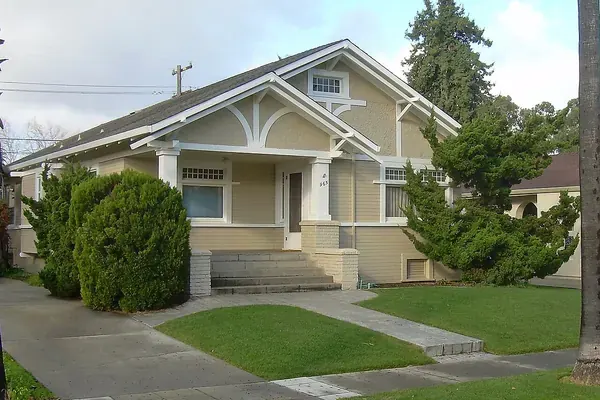
An FHA streamline refinance replaces an existing FHA-insured mortgage with a new FHA loan using reduced documentation: no appraisal at all, and in the non-credit-qualifying version no credit report and no income check. In exchange, HUD Handbook 4000.1 (section II.A.8.d) requires at least six payments and 210 days since the old loan closed, a clean recent payment record, and a net tangible benefit — on a fixed-to-fixed refinance, a combined rate (interest plus annual mortgage insurance) at least 0.5 percentage point lower than before.
FHA streamline requirements at a glance
| Requirement | What HUD requires |
|---|---|
| Existing loan | An FHA-insured first mortgage; the new loan must pay it off |
| Seasoning | On the date the FHA case number is assigned: at least six payments made, six full months since the first payment due date, and at least 210 days since the old loan closed |
| Payment history (non-credit qualifying) | Every payment made within the month due for the six months before case number assignment, no more than one 30-day late payment in the six months before that, and the payment for the month before closing made on time |
| Net tangible benefit | A lower combined rate, a switch from an ARM to a fixed rate, or a shorter term, by the thresholds in the table below |
| Appraisal | Not required; if the lender happens to have one, it does not change eligibility or the maximum loan |
| Credit report | Not required on a non-credit-qualifying streamline; required on a credit-qualifying one |
| Cash to you | No more than $500 at closing (a refund of your old escrow balance does not count) |
| Maximum term | The lesser of the old loan’s remaining term plus 12 years, or 30 years |
| Property | Principal residence, HUD-approved secondary residence, or investment property (the last two only into a fixed rate) |
| Mortgage insurance | New upfront premium of 1.75% and the annual premium from FHA’s schedule; loans endorsed on or before May 31, 2009 refinance at 0.01% upfront and 0.55% a year |
Two things are not on the list. There is no FHA minimum credit score for the non-credit-qualifying version, and there is no maximum combined loan-to-value: existing second liens just have to agree to stay behind the new first mortgage. Lenders can and often do add their own requirements on top, which is why one lender may turn down a streamline another accepts.
Non-credit-qualifying or credit-qualifying
The non-credit-qualifying streamline is the one people mean by “streamline.” Every borrower on the existing loan must stay on the new one; the lender does not verify income, employment or assets beyond the funds needed to close, and can use an abbreviated loan application. The single exception: after a divorce, legal separation or death, a borrower may be removed from the loan and title if the decree or agreement gave the property and the payment to the remaining borrower, and that borrower can show six months of payments made on their own before the case number was assigned. New people can be added to the title without any credit review.
The credit-qualifying streamline keeps at least one original borrower but lets others leave for any reason. In exchange, the file goes through full manual underwriting — credit report, income, debt-to-income ratios — except for the appraisal. Our guide to manual underwriting lists the ratios and compensating factors HUD uses. Either way, HUD requires lenders to underwrite streamlines manually: an automated TOTAL Scorecard result has no value on these files.
The net tangible benefit test
HUD measures the benefit on the combined rate: the note rate plus the annual mortgage insurance premium rate. For refinances that do not shorten the term, or shorten it by less than three years, the new combined rate must meet these thresholds:
| From | To a fixed rate | To a one-year ARM | To a hybrid ARM |
|---|---|---|---|
| Fixed rate | At least 0.5 point lower | At least 2 points lower | At least 2 points lower |
| ARM, less than 15 months to the next rate change | No more than 2 points higher | At least 1 point lower | At least 1 point lower |
| ARM, 15 months or more to the next rate change | No more than 2 points higher | At least 2 points lower | At least 1 point lower |
If you shorten the term by three years or more, the test changes: going fixed to fixed, the new combined rate only has to be below the old one, but the new principal, interest and mortgage insurance payment cannot exceed the old one by more than $50. Moving from an ARM into a shorter fixed loan, the combined rate can be up to 2 points higher under the same $50 cap.

A worked example
Illustrative rates, not an offer. A borrower owes $280,000 on a 30-year fixed FHA loan at 6.75% with annual MIP at 0.55%: a combined rate of 7.30%. A new 30-year fixed at 6.125% with the same 0.55% MIP gives a combined rate of 6.675% — 0.625 point lower, so it passes the fixed-to-fixed test.
- Principal and interest on $280,000 over 30 years: about $1,816 a month at 6.75%, about $1,701 at 6.125%.
- The new upfront premium, 1.75% of the base loan (about $4,900 here), is normally financed, which brings principal and interest on the new note to roughly $1,731.
- Annual MIP at 0.55% on $280,000 is about $128 a month on both loans.
That is a saving of roughly $85 a month before closing costs, while restarting a 30-year clock. Whether it is worth it depends on the costs and on how long you keep the loan: divide what you pay to refinance by the monthly saving to get the break-even month, the same arithmetic as in our rate-and-term refinance guide. The upfront premium on the old loan is not refundable, except that part of it may be credited when the loan is refinanced into a new FHA-insured mortgage; any such credit reduces the maximum new loan.
What the new loan can include
For a principal residence or HUD-approved second home, the new base loan cannot exceed the lesser of (a) the current principal balance plus interest due, late charges, escrow shortages and MIP due, or (b) the original principal balance including any financed upfront premium — minus any upfront premium refund. Closing costs, prepaid items and discount points are not added to that base; you pay them in cash, with a lender credit, or through a new second lien whose proceeds pay those costs or reduce the FHA balance. On an investment property the base loan is capped at the lesser of the current balance or the original balance, with nothing added.
When a streamline is the wrong tool
- You want cash out. The $500 cap rules that out; an FHA cash-out refinance or a conventional cash-out needs an appraisal and full underwriting.
- You want to stop paying FHA mortgage insurance. A streamline keeps you in FHA insurance, with a new upfront premium. Leaving it means a conventional refinance once the equity supports one; our FHA requirements guide explains when the annual premium ends on its own.
- Your payments have slipped. The payment-history test is strict. If you are already behind, a free HUD-approved housing counselor is the better first call.
- The saving is thin. A rate that only just clears the half-point test can still take years to repay its closing costs.
Frequently asked questions
Does an FHA streamline refinance require an appraisal?
No. HUD does not require an appraisal on any streamline refinance, and an appraisal the lender happens to obtain does not change eligibility or the maximum loan amount. For mortgage insurance, FHA uses the property’s original value.
How soon can I do an FHA streamline refinance?
On the date the FHA case number is assigned, you need at least six payments on the current loan, six full months since its first payment due date, and at least 210 days since it closed. All three must be met.
Can I do an FHA streamline with a late payment?
For the non-credit-qualifying version, every payment in the six months before case number assignment must have been made within the month due, with no more than one 30-day late payment in the six months before that, and the payment for the month before closing must be on time. A borrower who used forbearance is eligible after completing the plan and making three consecutive on-time payments.
Can I take cash out with an FHA streamline?
No more than $500. Borrowers who need equity out use a cash-out refinance instead, which requires an appraisal and full underwriting.
Can I remove a borrower with an FHA streamline?
On a non-credit-qualifying streamline, only after a divorce, legal separation or death, and only if the remaining borrower has made the payments for six months. On a credit-qualifying streamline, others can leave as long as at least one original borrower stays and the file passes full underwriting.
Does an FHA streamline get rid of mortgage insurance?
No. The new loan is FHA-insured, with a new 1.75% upfront premium and an annual premium from the current schedule. Mortgage insurance ends only under the duration rules of FHA’s schedule, or when you refinance out of FHA.
Can I streamline an FHA loan on a rental property?
Yes, into a fixed-rate loan only, and without adding closing costs to the loan: the maximum is the lesser of the current balance or the original balance.
Free 11-page PDF
Free: Refinance Break-Even Worksheet
Homeowners with a Loan Estimate for a refinance, or about to ask for one.
Get the free PDFSources
Related: USDA vs VA loan: which is better, and how both compare with FHA and conventional, Manual underwriting: when a human decides your mortgage, and the ratios they use, VA IRRRL: how the VA streamline refinance works, and the three tests it must pass. Hub: Conventional loan.