The Claude Loan Library: Every Workbook and Ebook
For buyers, owners and mortgage professionals who want every working document we publish, from the first application to closing, flood, title, appraisal and compliance.
16 titles in one purchase: the complete home loan kit and all 13 ebooks.
Best value: the same titles cost $431 bought one by one.
$99
$99 is the total, nothing added at checkout.
Guaranteed as described, or refunded in full, and the wrong title switched within 7 days. Refund policy
16 titles for $99: $6.19 per title.
Secure checkout by Stripe (card or Apple Pay). Refund policy
Questions: mail@noreply.claude-loan.com
- The Complete Home Loan Kit: FHA, VA, USDA and Conventional (3 workbooks, $49 alone)
- The Flood Insurance Workbook for Home Buyers and Condo Owners (2026) (9 chapters, 28-page PDF, $19 alone)
- The Owner's Title Insurance Guide for Home Buyers (2026) (8 chapters, 22-page PDF, $19 alone)
- The Construction and Renovation Loan Workbook (2026) (10 chapters, 27-page PDF, $24 alone)
- The Reverse Mortgage (HECM) Decision Workbook (2026) (10 chapters, 24-page PDF, $24 alone)
- The Mortgage Compliance Study Guide (2026): ECOA, TRID, RESPA, SAFE Act and More (10 chapters, 32-page PDF, $39 alone)
- The Self-Employed Mortgage Income Workbook (2026) (11 chapters, 34-page PDF, $24 alone)
- The SCRA and Military Homeowner Workbook (2026) (10 chapters, 31-page PDF, $19 alone)
- The Low Appraisal and Appraisal Gap Playbook (2026) (10 chapters, 28-page PDF, $19 alone)
- The Jumbo and High-Balance Loan Workbook (2026) (8 chapters, 28-page PDF, $29 alone)
- The Loan Originator Compensation and Conduct Handbook (12 CFR 1026.36, 2026) (10 chapters, 41-page PDF, $49 alone)
- The Flood Compliance Toolkit for Lenders and Loan Staff (12 CFR 339, 2026) (9 chapters, 35-page PDF, $39 alone)
- The Condo Buyer's Mortgage Workbook: Project Approval, HOA Questionnaire and Insurance (9 chapters, 41-page PDF, $29 alone)
- The ECOA and Regulation B Adverse Action Toolkit for Mortgage Lenders (2026) (10 chapters, 50-page PDF, $49 alone)
- 16titles in one purchase
- 152chapters
- 593checklist items
- 158links to official sources
- $332saved vs $431 one by one
Checked before every release
Every rule is cited by section to an official source you can open (how titles are checked, corrections)
- 68automated testsrun at every release: prices, links, pages and data checked before publication.
- 158official sources linkedevery rule quoted with its section (eCFR, Fannie Mae, HUD) so you can check it.
- October 30, 2026editiondate of the current edition; rules and annual limits are updated when they change, and corrections are dated.
Built from the rules and data of federal law (eCFR, U.S. Code), Fannie Mae, HUD, CFPB, VA, Freddie Mac.
Everything we publish, in one purchase: the complete home loan kit and every ebook: flood insurance for buyers and for lenders, title insurance, condo project approval, construction and renovation loans, reverse mortgages, mortgage compliance, self-employed income, the SCRA for military homeowners, low appraisals, jumbo and high-balance loans, loan originator compensation, and ECOA adverse action notices.
In pictures

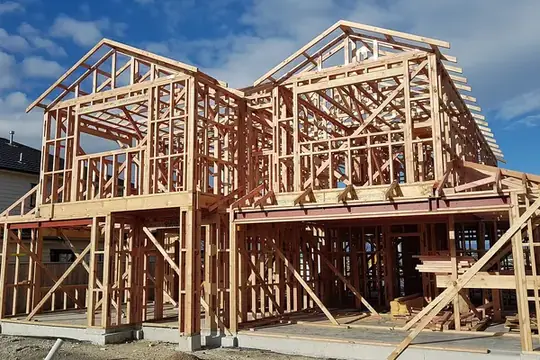


Illustrative photos, published by their authors under free licenses. They do not show our team, our readers or any loan.
What you get, title by title
The Complete Home Loan Kit: FHA, VA, USDA and Conventional
Pick the loan program you really qualify for, price it to the dollar and close without a missed deadline: three printable workbooks, one kit.
The Flood Insurance Workbook for Home Buyers and Condo Owners (2026)
Know exactly what your lender must require, what the NFIP or a private policy really pays, how a condo master policy protects you, and how to lower the premium before you sign.
- Is the home in a flood zone? Read the determination and the map
- What your lender must require, and what it may add
- The NFIP policy decoded: limits, deductibles, waiting periods and fees
- Private flood insurance: when the lender must accept it, and how to compare
- Condo buyers: the RCBAP master policy and the gaps on your unit
- Pricing flood insurance before you make an offer
- Lowering the premium legitimately
- After closing: escrow, renewals, force-placed insurance and claims
- Letters, scripts and the final checklist
The Owner's Title Insurance Guide for Home Buyers (2026)
Decide whether you need an owner's policy, price it to the dollar, read the title commitment line by line and know what to do if a claim ever comes.
- What title insurance covers, what it never covers, and whether you need it
- How the premium is set in your state
- Reading the title lines on your Loan Estimate and Closing Disclosure
- Who pays, who chooses, and your rights under RESPA
- The title commitment: requirements and exceptions, line by line
- Policy forms and endorsements that matter to a home buyer
- Special situations: new construction, foreclosures, sales by owner, cash and condos
- Closing day and afterwards: wire fraud, the final policy and claims
The Construction and Renovation Loan Workbook (2026)
Choose between a one-time close, a two-time close, FHA 203(k), HomeStyle or a USDA combination loan, then budget, vet the builder, manage the draws and convert without surprises.
- Choose the structure: one closing, two closings, or a renovation loan
- The single-closing construction-to-permanent loan (Fannie Mae rules)
- The two-closing alternative: when it makes sense and what it costs
- Government-backed single-close loans: USDA, FHA and VA
- Renovation mortgages: FHA 203(k) and Fannie Mae HomeStyle in 2026
- Budget: hard costs, soft costs, contingency and interest during construction
- Vetting the builder and reading the construction contract
- Draws, inspections and lien waivers
- Delays, overruns, completion and conversion
- Letters, scripts and the final checklist
The Reverse Mortgage (HECM) Decision Workbook (2026)
Understand what a HECM really costs, prepare your counseling session, protect a spouse and your heirs, and compare it honestly with the alternatives before anyone asks you to sign.
- How a HECM works, and the 2026 numbers
- Every cost, up front and over time
- Choosing how to receive the money
- The obligations that can make the loan due
- Spouses, co-owners and others living in the home
- What heirs can do, and the deadlines
- Reading your disclosures and preparing the counseling session
- Three scenarios, priced over 15 years
- Planning the exit: moving, care, selling and family
- Alternatives, taxes and benefits, and the scams to avoid
The Mortgage Compliance Study Guide (2026): ECOA, TRID, RESPA, SAFE Act and More
One-page rule summaries with the 2026 thresholds, the deadlines that exam questions love, and more than 100 original practice questions answered with the exact CFR section.
- The map of federal mortgage rules and the numbers that move
- ECOA and Regulation B
- Regulation Z part 1: TRID disclosures, tolerances, APR and rescission
- Regulation Z part 2: HOEPA, higher-priced loans, ability to repay, QM and loan originator rules
- RESPA and Regulation X: kickbacks, escrow and servicing
- Flood, HPA, SCRA, FCRA, HMDA and fair housing
- The SAFE Act: licensing, registration and loan originator conduct
- Advertising and unfair, deceptive or abusive practices
- Timelines: the deadlines on one page
- Mixed review: 30 questions across all chapters
The Self-Employed Mortgage Income Workbook (2026)
Calculate the income a lender will actually use from your tax returns, before you apply: Schedule C, K-1s, S corporations, less than two years, declining income, business funds, FHA, VA, USDA and bank-statement loans.
- Where you stand: how lenders read self-employed income
- Your document folder and the IRS transcripts
- Schedule C line by line: sole proprietors, 1099 contractors and single-member LLCs
- Rentals, farms, capital gains and sales of business property
- Partnerships, LLCs and S corporations: the K-1, your share and the liquidity test
- C corporations: when the business's earnings count
- Less than two years, declining income and the trend
- Using business money for the down payment or reserves
- FHA, VA, USDA and bank-statement loans
- Taxes against qualifying income: the trade-off and the calendar
- Letters, lender questions and the final checklist
The SCRA and Military Homeowner Workbook (2026)
Use the Servicemembers Civil Relief Act on your mortgage, your debts and your lease, then make the housing decisions that come with orders: buy with a VA loan, keep and rent, or sell, with letters, trackers and a calendar.
- Who the SCRA protects, and for how long
- The 6% interest cap: request it, check it, keep it
- The house when payments get hard: foreclosure, courts and your servicer
- Renting: ending a lease and the eviction rule
- Taxes and the house
- Buying with a VA loan while you serve
- PCS orders: keep and rent the house, or sell it
- Deployment: powers of attorney and the paperwork that keeps running
- When a creditor or landlord gets it wrong
- Your calendar and final checklists
- Sources
The Low Appraisal and Appraisal Gap Playbook (2026)
What to do when the value comes in below the price: read the report like an underwriter, use your rights, file a reconsideration of value that gets read, and close the gap with numbers instead of panic.
- The day the value comes in low: what it changes and your four paths
- How an appraiser reaches the number
- Your rights as a borrower
- When there is no appraisal: value acceptance, property data and ACE
- Before you sign: the contract decides your options
- The reconsideration of value, step by step
- Closing the gap: the negotiation math
- Second appraisals, transferred appraisals and changing lenders
- A low value on a refinance or a PMI request
- When the value may be biased or the appraisal broke the rules
- Sources
The Jumbo and High-Balance Loan Workbook (2026)
For buyers whose loan lands near or above the conforming limit: find your county's 2026 limit, see what changes between a standard, a high-balance and a jumbo loan, and decide with your own numbers whether to stay under the line.
- Find your 2026 limit: county, units and the address that decides
- Three zones, two lines: standard, high-balance and jumbo
- Pricing the line: high-balance adjustments and the higher-priced loan threshold
- Staying under the limit: down payment or a second mortgage
- Jumbo underwriting: income, assets and reserves
- Appraisals: one, two, or none
- Your state: the 50 states and their highest county limit
- Questions for the lender and the decision page
- Sources
The Loan Originator Compensation and Conduct Handbook (12 CFR 1026.36, 2026)
For loan officers, branch managers and compliance staff: how originators may and may not be paid, lender-paid or borrower-paid, the proxy test, the 10% bonus limit, the steering safe harbor, NMLS IDs and records, with a 40-point audit grid and 15 answered cases.
- Who and what the rule covers
- Lender-paid or borrower-paid: the dual compensation ban
- Terms of the transaction and the proxy test
- Pricing exceptions, concessions and point banks
- Profits-based plans and the 10% limit
- The anti-steering safe harbor
- Qualification, screening, training and NMLS IDs
- Records, liability and the loan officer's own loan
- The 40-point audit grid and the deadline table
- Fifteen cases, answered
- Sources
The Flood Compliance Toolkit for Lenders and Loan Staff (12 CFR 339, 2026)
For loan officers, processors, servicers and compliance staff at banks and credit unions: triggering events, the determination form, exemptions, the minimum amount, deductibles, escrow, notices, private flood, force placement and penalties, with a 35-point file checklist and 30 answered questions.
- Who, which loans and which events: the scope and the MIRE triggers
- The flood determination: the form, map changes and disputes
- Exemptions: three, and only three
- How much insurance, and the deductible
- Escrow of flood premiums
- Notices and timing at closing
- Private flood insurance: mandatory and discretionary acceptance
- Force placement and civil money penalties
- The 35-point file checklist and thirty questions, answered
- Sources
The Condo Buyer's Mortgage Workbook: Project Approval, HOA Questionnaire and Insurance
For buyers of a condo unit, as a home, a second home or a rental: find out whether the building can be financed, decode the HOA questionnaire line by line, check the insurance and the assessments, and price the real monthly cost before you commit.
- Warrantable or not: how lenders review a condo project in 2026
- The HOA questionnaire, line by line: Form 1076 and its addendum
- FHA and VA condos: the approved lists and the single-unit route
- Insurance: the master policy, your HO-6 and the gaps between them
- Special assessments, reserves and critical repairs
- Second home or rental: the occupancy rules and their price
- Condo costs on the Loan Estimate and in your monthly payment
- 25 questions for the association and the lender, and two letters
- Your timeline and the decision page
- Sources
The ECOA and Regulation B Adverse Action Toolkit for Mortgage Lenders (2026)
For loan officers, processors, underwriters and compliance staff: who is an applicant, what counts as an application, the 30-day clock, choosing and writing reasons on the Appendix C forms, incomplete applications and counteroffers, the valuations rule, age and public assistance, and the 25-month records, with 25 filled-in sample notices, a 40-point file audit grid and 20 corrected cases.
- Applicants, applications and adverse action
- The 30-day clock and the other notice deadlines
- What the notice must say and how to choose the reasons
- Incomplete applications and counteroffers
- The valuations rule (12 CFR 1002.14)
- Age, public assistance and protected income
- Records: 25 months, and what to keep
- Twenty-five sample notices, filled in
- The 40-point file audit grid and the deadline table
- Twenty cases, corrected
- Sources
Checkout by Stripe
Pay by card on Stripe’s secure page. Your card details never reach our servers.
Instant access
Your library opens right after payment, to bookmark, print or save as a PDF. A payment receipt is emailed to you.
One price, paid once
The price shown is the total in US dollars. No subscription, nothing charged later. Refund policy.
Sources you can check
An information publisher, not a lender, broker or advisor; not legal or financial advice. Terms of sale.
Frequently asked questions
What exactly is in the library?
16 titles: the complete home loan kit (the FHA, VA and USDA workbook, the conventional loan qualification workbook and the shopping and closing workbook) and the 13 ebooks listed on this page, each with its PDF.
Why is it cheaper than buying each title?
Bought one by one, these titles cost $431 in total. The library is one purchase at $99: the same files, with nothing removed.
Is it up to date for 2026?
Yes. Every rule is quoted as in force in October 2026, with its section number (CFR, HUD, FEMA, Fannie Mae or state rule) so you can check it yourself. When a rule or an annual limit changes, we update the online copy and the PDF.
Is the payment secure, and is it a subscription?
You pay once on Stripe’s secure checkout, by card or Apple Pay; your card details go to Stripe and never reach us. There is no subscription and nothing is charged later.
Who publishes the ebook?
Claude Loan, an information publisher: not a lender, broker, insurance agent, law firm or advisor, with no NMLS license. The ebook explains the official rules and gives you worksheets; your lender, insurance agent, a HUD-approved housing counselor or an attorney give the answers that apply to you.
What is the guarantee?
The ebook is guaranteed as described: if it does not open or contains an error, we fix it, and if we cannot, we refund you in full. Bought the wrong title by mistake? Write within 7 days and we switch it. A duplicate payment is always refunded. See the refund policy in the terms of sale.
$99 is the total you pay: no tax or fee is added at checkout. Payment by Stripe (card or Apple Pay), instant access after payment. Terms of sale and refund policy. Claude Loan is an information publisher, not a lender or advisor; the library is not legal or financial advice.